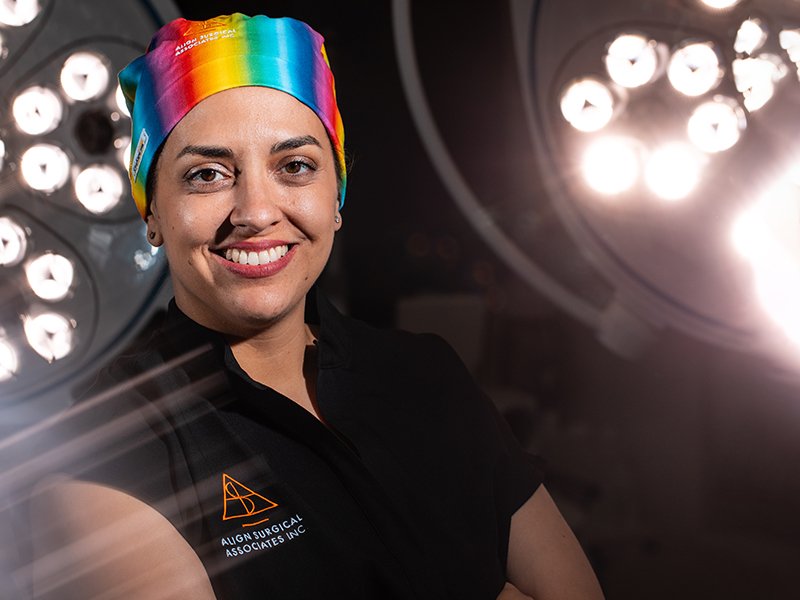
Last month, I was honored to give a lecture on gender-affirming surgery to the Internal Medicine Residents at UCSF and San Francisco General Hospital. This opportunity to engage with a group of dedicated medical professionals was both rewarding and invigorating. One aspect of my work that I value deeply is the multidisciplinary nature of gender-affirming care. It brings together professionals from a wide range of specialties—surgeons, physicians, mental health providers, social workers and beyond—all working in unison to address the unique and complex needs of transgender and gender-diverse individuals.
This collaborative approach not only enhances patient care by ensuring every aspect of their well-being is considered, but it also creates a space for mutual learning among providers. Sharing knowledge, discussing challenges, and exchanging ideas with colleagues in other fields fosters a deeper understanding of how our collective efforts contribute to the overall health and empowerment of the communities we serve. More importantly, it builds a sense of solidarity—an acknowledgment that we are united in our mission to improve health outcomes and provide compassionate, affirming care for our patients. Experiences like these reaffirm the importance of working together to create a healthcare system that is inclusive, equitable and holistic in its approach.
At Align Surgical Associates, we provide the full spectrum of gender-affirming procedures, which affords us a comprehensive and nuanced perspective of the gender-affirming surgery field. While any surgical procedure or technique could provide enough content for an entire lecture, we managed to cover a bird’s-eye view of all gender-affirming procedures from “head to toe.” This includes facial feminization surgery, breast augmentation, body contouring, and genital procedures such as phalloplasty and metoidioplasty, all of which are tailored to meet the individual needs of our patients. Each procedure plays a vital role in affirming one’s identity and contributes to the overall well-being of the patient, reinforcing the importance of a personalized, multidisciplinary approach to care.
We spoke at length about preparing patients for surgery, identifying and managing common post-operative complications for each procedure, and ensuring patients have the social support and resources they need for a successful recovery.
I appreciated the thoughtful questions posed by the residents and attendees, who have the expertise of longitudinal follow-up with patients (often for years!) before and after surgery. We discussed common challenges in delivering the care patients need and deserve, especially given the uncertainty of the current socio-political climate.
While my intent for the lecture was to impart surgical knowledge and perspective, I left UCSF’s Pride Hall that day feeling inspired and honored to be part of a community of helpers dedicated to serving and advocating for our patients. Experiences like these reinforce the importance of multidisciplinary care in treating the whole person, addressing not only their medical and surgical needs but also their emotional, social and psychological well-being.