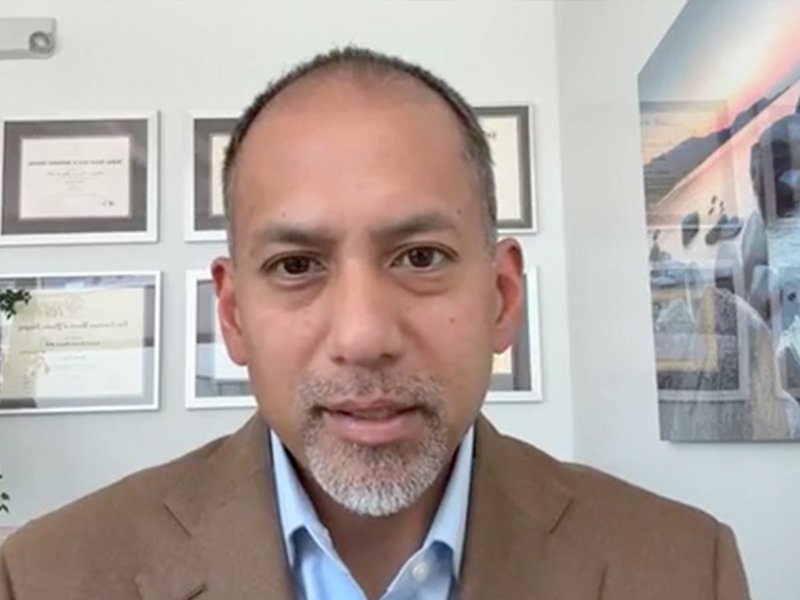
Dr. Gurjala, a board-certified plastic surgeon at Align Surgical Associates, recently hosted an Instagram Live on top surgery. During the discussion, Dr. Gurjala breaks down how to define your embodiment goals, how to communicate them to your surgeon, and how to avoid common pitfalls—giving you the knowledge to shape your best outcome.
Caption/subtitle instructions: To turn on subtitles, turn on closed captioning (CC icon), located at the bottom right of the video. To change the language, go to settings > subtitles/cc > auto-translate. Then, select your native language.
Thank you for watching!
Dr. Dev Gurjala:
Hello, everyone. My name is Dev Gurjala. I’m a board-certified plastic surgeon with Align Surgical Associates in San Francisco.
Thank you so much for joining me for this Instagram live session. Our topic today is on top surgery. Just a note, I have turned off the comments to prevent any potentially harmful commentary, but I really would like for you to answer questions. So please feel free to use the question function at the bottom and submit questions to me. Feel free to submit at any time and I’ll be sure to answer them as we go. We’ll save some time at the end to answer your questions as well.
So, with that, let’s dive in.
Again, we’re talking about top surgery today and really my goal in this session is to kind of give you an idea of how you can best reach your embodiment goals. And what I mean by that is what are the things to think about and look out for as you’re approaching top surgery? What are some useful ideas about top surgery to have in your head as you think things through? What are the range of requests that you can make to your surgeon to meet your goals? And what vocabulary can you use? To express those goals to your surgeon. Lastly, I’ll cover some common pitfalls that we see in top surgery so that you can be mindful of trying to avoid them. That’s our goal for today.
Let’s talk about embodiment goals for top surgery. Some people might just have the idea in their mind that they want to be flat. “I’d like the breast tissue to be removed because it’s dysphoric for me.” And that’s kind of as far a goal as they have, and that’s totally fine. That’s a great place to start. What I want to introduce is that there are other things that you can think about that will help you define your goals more precisely.
Another goal might be just, “I want a masculine appearing chest.” And if you say that to your surgeon, it’ll be pretty clear in terms of getting on the same page, but there will be some really good things to talk through, which I’ll show you.
Another goal might be that you want features of either masculine or feminine chest. You want some combination. And again, this will give you the words and vocabulary to talk about that with your surgeon. Okay, so that is our goal for today. I’m going to be sharing some images here and they’re obviously of medical nature so just be aware of that.
So this is an image here, and I know it might be kind of blurry and it’s black and white, but what I’m trying to show you here is that this is actually a photograph that is overlaid over the bony and muscular anatomy of the chest. And we’re kind of nerding out here on anatomy, but I think it’s really important to try to understand how this all works because it’ll help you with your top surgery goal.
This is a picture of a chest before puberty. I just want you to know what that looks like. And I’m going to take you through some more pictures which show what things look like as the feminine chest develops. Here’s the next picture. It’s a very subtle change, but you can see just the beginning of breast tissue growth right under the nipple. In this next picture, again, a little more growth. You can see a curve starting to develop at the bottom of the breast there. And then as we continue going through breast development, there’s definitely more breast tissue growth and formation of that arched shape below the breast. And then this picture here would be a more fully developed breast.
What I want you to understand is that the breast really is just a structure which exists on top of the underlying muscle and bony anatomy. What that means is that our goal in top surgery is to reshape that skin and breast tissue to fit whatever your own goals are. In many cases that means removing breast tissue, removing skin, and so forth. What’s interesting here is in showing you that development, what you can see is that the chest actually starts from the same place before puberty. As the breast tissue grows, it literally is stretching that skin on top of the peck muscle and increasing the surface area of that skin. It’s also stretching out the nipple and areola. The female appearing areola is often bigger. That’s just because it’s the pre-pubertal areola, which has been stretched out over time as the breast develops. Again, our goal is to reset that skin and breast tissue to where it was before development. I think that’s a really useful way to think about how we do top surgery.
We’re going to come back to this as we go through.
This picture here is a more clear picture of the underlying muscle and bone. The reason I’m showing this is to give you the idea that this is really the foundation of our chest reconstruction. It becomes a foundation for the type of surgery that we do. We use the landmarks that are shown here and specific points and features to guide whatever your embodiment goals are. If you now know this underlying anatomy, you can understand better the differences between a masculine and feminine appearing chest.
If you look here at this picture on the right, you see that the masculine chest has that groove, which is kind of a squared off shape and it follows exactly where that peck muscle is. Whereas in the feminine appearing chest, you see that the breast, that groove or fold is much lower and it’s a different shape. It’s in the shape of an arc. If we are looking to move things in a more masculine direction or whatever your embodiment goal is, then something we work on is where that fold is located. Is it low or is it at the level of the pec? And what is its shape? So, just diving into details of what a really masculine shape is. This is sort of an idealized version of a masculine chest. Not many people look like this, but it does point out the details that you can look for and consider. That black line there shows a very particular shape. If you notice, there’s sort of a tight upturn near the middle of the chest, and then it’s flat as you move out to the side. Then there’s kind of a more broad turn as it goes up at a 45 degree angle into the armpit area. That is a very defining trait of a masculine appearing chest. Also notice the nipple location, we’ll talk about that in a little bit, but I just want you to see that very, very specific shape. Once more going into the actual anatomy, you can see that that shape is just the shape of the lower board of the pec muscle.
One of the things to really consider when you’re thinking about top surgery is the shape of the scar, especially in double-incision surgery. Do you want the shape with that scar to match the peck muscle border? Now, if you’re going for a mask-on-appearing chest, that will often appear, create the most natural appearing result, is simply following that shape. If you want to do that, there really is no guesswork as to where you start that incision or you want that incision to end up. If you look here, that is the head of rib number five. You can count the number of ribs and you see that the pec muscle always starts at the head at rib number 5. And you can see the rib coming off at an angle. That’s what creates that first small turn, creating that masculine shape. So when your surgeon is doing this operation, my point here is that there is no guesswork as to where that incision should land because the body shows you, it’s rib number five right there. So if you’re going for a masculine look, my view is that your surgeon really needs to pay attention to that and make sure to land and start the scar right there at rib number 5.
There’s another thing to pay attention to, which is that remember how in the feminine appearing chest, the breast fold is lower and it’s often in the shape of an arc. If you’re going for a more masculine appearing chest you really want to not have that arc shape. There will be a memory of that shape because the breast tissue has pushed the skin and the attachments into the shape of that arc. One thing that I make sure to do when I’m doing this operation is to divide those attachments and release them so that we erase the memory of that arch shape. What I like to do is use sutures to attach that lower portion of the scar to the lower border of the pec muscle. Again, creating that exact shape where it follows that pec muscle border. If you don’t do that, then you can still have that memory of that arc or a shadow in the shape of a curve, which is under the final scar. That can be distracting to some people.
Another reason to anchor the lower border, the incision to the pec muscle, is that if you don’t do that, when somebody moves around, that incision can slide all over the place and that can look unnatural because in a more masculine appearing chest, that scar actually stays with the pec muscles and moves with the pec muscle itself, not sliding over it at the level of the skin. Another detail to think about when you talk to your surgeon.
With regard to scar shape is that I’ve been talking a lot about a masculine appearing chest, but of course there are many other embodiment goals that you might have. Some people might prefer an incision shape which doesn’t have that upturn towards the middle. That’s here labeled as a no upturn towards the metal where it’s a little more flat in the middle, others might need to have an incison where they actually go off more to the sides and wrap around this way. That’s especially something that we do if there’s extra skin or fatty tissue here that we want to smooth out. If there is a roll, we can take care of that. So that’s one situation where the tissue might go up to the side rather than up along the pec muscle. Other people might want more flat scars, just kind of straight across and that can be done as well. Somebody who might be non-binary or wanting a more still feminine feature, they might want scars which still are more curved. So that’s that picture in the corner. That’s something that we can do. These are things that you can talk about with your surgeon. These are all possibilities that you can see if your surgeon can do for you to meet your embodiment goals.
The next thing I’d like to talk about is contour. One of the most difficult things to deal with in people who have had top surgery is if they end up with a concave chest appearance, if it’s too thinned out or it looks like it sunk in. That happens when too much breast tissue is removed. We obviously want to remove some breast tissue, but when you remove all the breast tissue that makes it more like a mastectomy done for cancer purposes, where you’re trying to remove every last bit of tissue, breast tissue. But if you do that in the setting of top surgery for gender affirmation, that’s how you can get that really sunken appearance which many people don’t like and doesn’t look natural. What I think is a key point is that some breast tissue needs to be left behind. Specifically in the location under where the nipple is going to be located. You see in this picture here, there’s a little bit of breast tissue right under where the Nipple is. And what that does is it makes the nipples come out just a little bit, and it provides a more natural contour to avoid that sunken appearance. What’s very interesting is that cis males have a little a bit of breast tissue right in that location, right under the nipple. That’s why there’s that contour and it doesn’t look sunken. If you’re going for a masculine appearance, it is natural to leave behind a little bit of breast tissue because cis males have that as well. I do think it’s a mistake to remove all the breast tissue and leave patients with a chest that looks too concave. Some people might want more breast tissue up behind the neck. They’re looking for a more full contour and that can be done as well. Just talk about that with your surgeon.
A really important point about contour is this area of the chest up here. There’s breast tissue, but in between the breast and the armpit area, there can be what’s called accessory breast tissue or just an extra bulge right here. Many people have this in varying degree, some more than others, but if you imagine that we’re trying to create a more flat appearance at the level of the pec and removing most of that breast tissue, but then leaving behind a pouch of breast tissue here, that can accentuate the appearance of this tissue and make it look bigger or make it more prominent than it did before the breast tissue was removed. It’s really important that you talk with your surgeon if you have that extra tissue there about making sure that it’s removed to keep that balance and to not make it look even bigger than it was before this breast tissue was taken away. I think removing that breast tissue is very, very important.
Another really important thing to talk about is all the considerations around the nipple and areola. The biggest one, of course, that people ask about is placement. Like, how do you know where the right place is to put the nipple graphs? If you’re going for a masculine appearance, I really think there’s no guesswork involved. The exact location where it would go to look natural is right at the inflection point or where the peck muscle changes direction and heads up towards the armpit. There’s an angle right there and you can see that in the picture. That corner is where the nipple ideally would go for a masculine appearance. No guesswork. Not inside, not outside, not above, not below. Although we see that a lot of times that the nipples are too far in or too far out or even look at it up here, and that’s really hard to fix. It’s worth discussing with your surgeon where you want that nipple to be placed. Once more, I’ve been sort of talking mostly about a masculine-appearing chest, but some people might want features that bar from either side, and they’re not quite as masculine. You might want an areolar diameter, which is a little bit larger than a conventional masculine appearance, and that’s totally possible. You might want the nipples located a little more towards the middle. To have more of an in-between appearance and that’s possible as well. Many patients forego nipple reconstruction and don’t want nipple grafts at all. And their preference is for a chest absent without nipples or they plan to get a tattoo done in the future and have what’s called a 3D nipple tattoo where very realistic nipples can be created but with use of tattooing and ink, and avoiding having to go through the healing period of a nipple graft. Other patients might want a tattoo chest piece across this whole area and that’s totally fine too. So no nipples are definitely an option.
Some other key points to think about here. The actual shape of the nipple graft. I think an important detail is to make the shape of nipple graphs a little bit elliptical or oval. If you can see in that picture on the left, it’s not a perfect circle it’s a little more of an oval shape. Not only that, it’s actually canted or tilted a little bit towards the outer and upper side. There’s about a 15 degree angle or cant there. The reason for that is that when we’re doing the operation, the patient’s arms are often out to the side. You can tell that when you move your arm out, it actually pulls the skin up in that direction and makes things a little elliptical and that cant. The reason to do the nipple graft in that particular shape is because when the patient brings their arm down, then you want the nipples to level out and go back into the shape of a circle.
Another thing to think about is, if you’re going to have a nipple graft, having it sit flush with the skin that surrounds it. Sometimes the nipples can look like they’re pasted on, or there’s the regular skin, and then there’s a bump up to where the nipple graft is, and then back down to the regular skin, and it looks pasted-on, or like a pepperoni slice, so there’s an easy way to avoid that, which is to score the area around where the nipple’s going to go and make a groove that you can then inset the nipple graft into so that when it heals it is flush and looks natural. Another tiny detail that you could talk about with your surgeon.
Lastly, with regard to the nipple size itself, people often use the word nipple and areola interchangeably, but they are two components of that area. The nipples, the actual thing sticking out and the areola is the surrounding tissue that’s circular. We can reduce the size of the areola and we can reduce the size of the nipple itself. People often ask me, “you know, I know you can re reduce the diameter of the arrow, but can you reduce the nipple as well?” The answer is yes. One word about nipple, about areolar diameter because we are closing this area and it’s under tension, the skin can stretch out. This can often lead to the areolar diameter also increasing over time, especially in the case of keyhole surgery. Years later, even though you may have very precisely tried to get the areolar diameter to be a certain, like 25 millimeters or so, it can stretch out to more than that. Another little detail that your surgeon can do is to use what’s called a per string suture or a stabilizing suture to encircle the areola and lock it down into the desired diameter so that over time, it stays that way and doesn’t stretch out. Again, another detail you can ask your surgeon about and which I think does make a difference with your embodiment goal.
I haven’t talked too much about the different techniques for how top surgery is done, but the two broad ones are keyhole and double-incision. There are variations of that, like buttonhole. And there are different types of keyhole. Keyhole is a broad term. The specific ways that keyhole can be done are called peri areolar, which means an incision at the lower border of the areola, and circum areola which means an incision all the way around the areol. I’m not going to go into detail because that’s outside the time we have, but my point in talking about the techniques is that all the principles that I talked about: scar shape, scar location, nipple placement, nipple size and location, all those principles still hold and are the foundation for your embodiment goal no matter the technique that is used.
This is a summary of these things to think about for your embodiment goals. We’ve talked about scar placement, scar shape, features of the areola, its size, placement, and shape, and the overall contour of the chest that you’re trying to achieve.
We’re coming to the end of our half hour here. I really hope that this has given you some insights into how to think about top surgery. Giving you the vocabulary, the words to use with your surgeon and giving you an idea of the different range of things that you can request from your surgeon. I really hope that was helpful for all of you.
We have a couple of questions that have come in. One of them is, is top surgery covered by insurance and the answer is that in the vast majority of cases, yes. Most of our cases are done through insurance. We’re happy to work with the insurance company to get approval.
Another question is, should I stop hormone therapy before surgery? And if you’re on testosterone, the answer’s no. You can keep on that. What we’ve found is that patients are happier on their hormones, and it does not have any disadvantage or risk when doing the surgery.
Another question is about sensation. If you, that kind of depends on the technique that is being used. If you’re getting a nipple graft, there will probably be a decrease in sensation. What I hear from most of my patients is that it’s not zero sensation. Over time, and time meaning maybe six months to a year or so, there will be some nerve growth into the nerve graft, and it often ends up feeling like normal chest skin. Maybe a little bit less, but you know, in that range. I don’t think it’s usually zero, but it is often less than the original nipple sensation.
One more question was about wearing compression vests. I recommend wearing it for four to six weeks. The purpose of the vest is to reduce swelling. If you’re claustrophobic or you’re too hot or sweaty or can’t take it, now it is possible to not wear the compression vest and that’s fine after the first week or so. It just means that the swelling will stay around that much longer. So, if you can, it is nice to keep wearing that compression for as long as six weeks.
Lastly, I got a question about drains. In our practice, with most of the surgeons at Align, if not all, we rarely use drains. That’s because we do a certain type of suture, which actually closes things down and doesn’t leave any open space and helps the tissue heal and stick down so that fluid doesn’t have an opportunity to accumulate and therefore drains are not necessary. We may use it on very rare occasions but for most patients, no drain. People are really happy about that.
And very last question is about trying to build your chest muscle after the surgery. You can after you’ve healed for about four to six weeks, you can work out, hit the gym, build your pec muscles. One thing is that if you’re going for a mass clinic, parents, I actually encourage trying to build up your pec muscles before the surgery, because as you saw, that pec muscle is really the foundation of our landmarks and our contour and all those other things that I talked about, nipple placement. It really helps if that pec muscles well-defined.
Well, we’re at half an hour and that was all our questions. Thank you again, everyone, for joining. Again, my name is Dr. Gurjala with Align Surgical Associates. We’re in San Francisco. Feel free to go to our website and give us a call. We’re always super happy to answer your questions. Okay, thank you so much.
Take care, everyone.