Whether you’ll maintain nipple sensation after top surgery depends primarily on the technique used. Nipple-sparing approaches, such as periareolar or keyhole, buttonhole, and inverted T or anchor incision (also known as “radical reduction” or Wise pattern) top surgery, offer the best chance of preserving some degree of sensation, while free nipple grafting, which is common in double incision surgery, typically results in reduced or altered feeling.
That said, many patients do experience a return of some sensation over time, and newer techniques such as neural grafting may improve outcomes for those who need more extensive chest reconstruction
Why Nipple Sensation Changes After Top Surgery
Nipple sensation is carried by small nerve branches that run through the breast tissue to the nipple and areola. Surgery inevitably disrupts some of those pathways. How much sensation is affected and whether it returns depends on which nerves are involved, how they are managed during surgery, and which technique is used.
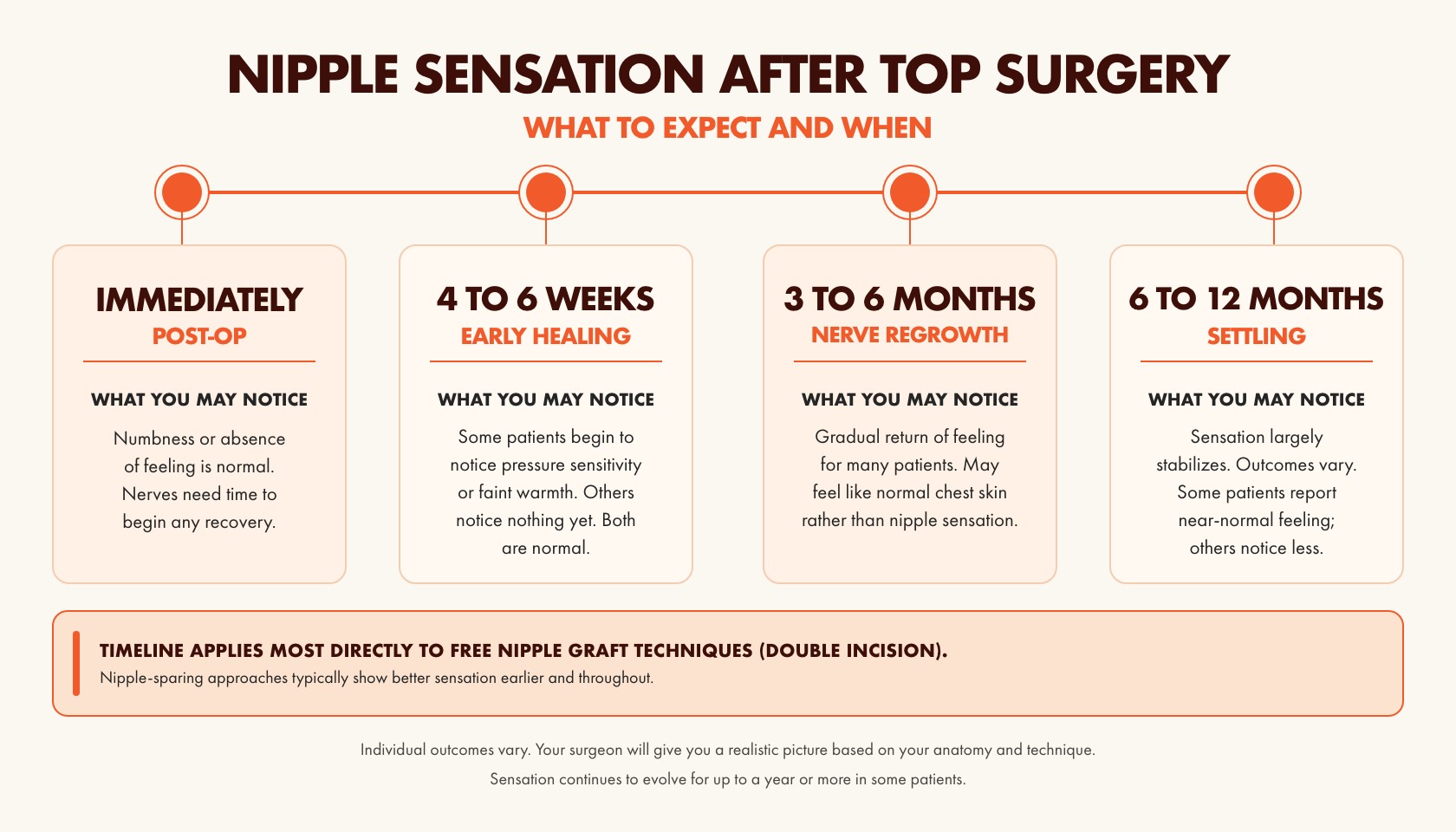
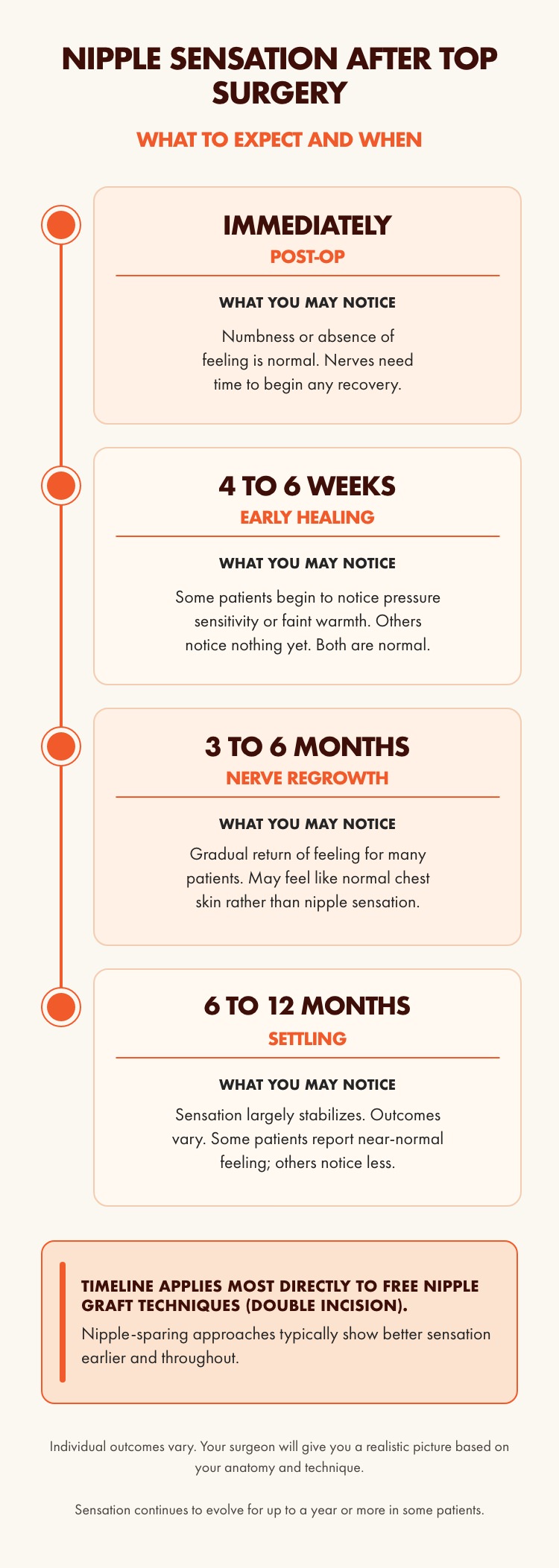
Sensation loss isn’t always permanent. Nerves can and do regenerate, and it’s common to see gradual improvement over the next 6 to 12 months as healing continues. Where you start that recovery from, though, depends heavily on which technique was used.
How Surgical Technique Affects Sensation
Each top surgery technique carries its own trade-offs for nipple sensation. Here’s what to expect from the approaches offered at Align Surgical Associates.
Double Incision With Free Nipple Grafts
A double incision is usually the recommended approach if you have a medium to large amount of chest tissue or low skin elasticity, since it gives your surgeon the most control over contour and scar placement. The trade-off is nerve sensation. Because the nipples are removed and repositioned as free grafts, the nerve connections get severed in the process, and most patients notice a significant reduction in feeling afterward. Some sensation can come back, often as pressure or warmth rather than the feeling you had before, as the graft heals and nearby nerves gradually grow toward the areola. It’s realistic to expect that full sensation won’t return to presurgical levels.
Periareolar Incision (Keyhole) Top Surgery
These limited-incision techniques are typically reserved for patients with a smaller chest and good skin elasticity. Because the nipple remains attached to the surrounding dermis throughout the procedure, the nerve supply is largely preserved. Patients undergoing keyhole or periareolar surgery tend to report better native sensation than free nipple grafts.
Inverted-T Top Surgery
Inverted-T top surgery, sometimes called anchor incision surgery or Wise pattern or “radical reduction,” is an option for patients with very large chests or significant excess skin who want more reshaping than a standard double incision provides. It combines a horizontal incision along the chest crease with a vertical incision running upward, forming an anchor shape. Because the nipple is typically preserved by leaving breast tissue directly below it attached to the chest wall, sensation outcomes can be better than with free nipple grafting, though the more involved scar pattern is an important trade-off to weigh.
Buttonhole Top Surgery
Buttonhole top surgery is a variation of double incision that preserves the native appearance and possibly preserves sensation by keeping the nipple connected to its nerve and blood supply through breast tissue that remains connected to the chest wall. Sensation outcomes are generally better than with free nipple grafting, though this technique is more selective in terms of candidacy. During your consultation, your surgeon will assess whether your anatomy and goals make you a good fit.
About Neural Grafting
For patients undergoing procedures that require free nipple grafting (like double incision), Align Surgical Associates now offers neural grafting as an additional option. Rather than a separate surgical approach, it’s a technique that can be incorporated
into surgery with the goal of repairing or reconnecting nerve pathways to the nipple at the time of the procedure. The aim is to improve the likelihood and extent of sensation recovery in cases where it would otherwise be most at risk. Neural grafting represents an important area of innovation in gender-affirming chest surgery. Your surgeon will discuss whether you’re a candidate during your consultation.
The right technique for you depends on your anatomy, your chest size, and what matters most to your embodiment goals. Sensation, scarring, and contouring will be discussed during your consultation. Your Align surgeon will help you weigh the trade-offs honestly.
Making Sensation Part of Your Surgical Conversation
Nipple sensation matters to many patients. When you speak with your Align surgeon, consider sharing:
- How important nipple sensation is to you relative to other goals, such as chest contour, scar placement, and recovery.
- Whether preserving sensation would influence which technique you prefer, even if it involves trade-offs in other areas.
- Any questions you have about neural grafting and whether it may be appropriate for your anatomy and surgical plan.
Your embodiment goals are personal, and there’s no universal right choice. What matters is that your surgical plan reflects what you want and that you go into surgery with realistic expectations and honest guidance from your care team.
Ready To Talk About Your Options?
At Align Surgical Associates, our board-certified surgeons take the time to understand your priorities and explain what each technique can and cannot realistically achieve for your anatomy. If nipple sensation is part of what you are weighing, we look forward to discussing your options.
Call our office today at (415) 530-5335 or request a consultation using the online form.