
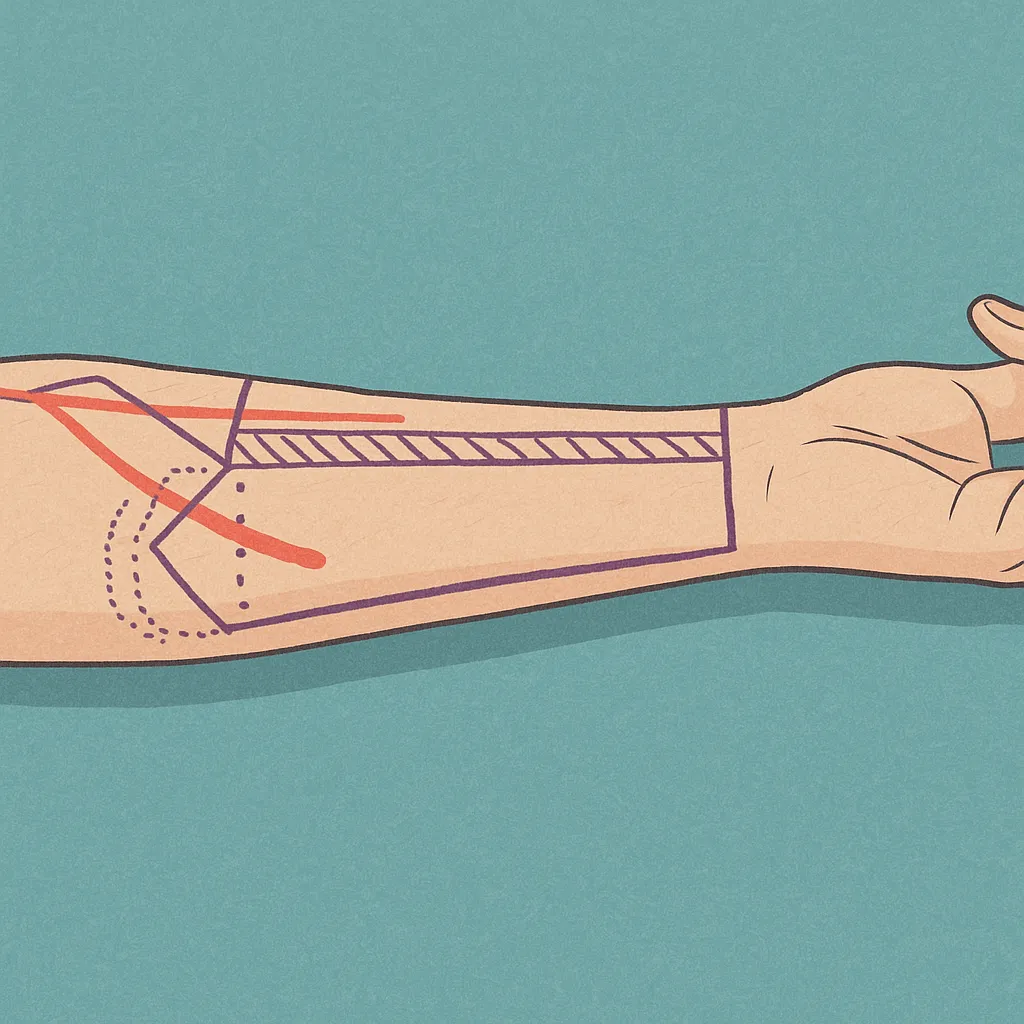
Radial forearm phalloplasty (RFF) has long been regarded as the benchmark technique in microvascular phalloplasty, particularly for gender-affirming genital reconstruction. Despite the emergence of alternative donor sites such as the anterolateral thigh (ALT) or latissimus dorsi, RFF continues to set the standard due to its unmatched reliability, versatility, and functional outcomes.
Microsurgical Reliability and Vascular Consistency
At the heart of RFF’s dominance is its predictable vascular anatomy. The radial artery and its accompanying venous system offer consistent, robust perfusion, making the flap highly amenable to microsurgical transfer. Surgeons benefit from a well-mapped vascular territory, which reduces intraoperative uncertainty and improves flap survival rates. This reliability is especially critical in phalloplasty, where tissue viability directly impacts urethral integrity, sensation, and aesthetic outcome.
Thin, Pliable Tissue Ideal for Urethral Construction
The radial forearm flap provides thin, pliable skin with minimal subcutaneous fat, making it uniquely suited for creating a neourethra. This is a key advantage over bulkier donor sites like the ALT, which often require debulking or staged revisions. RFF allows for a “tube-within-a-tube” configuration in a single stage, facilitating both urethral lengthening and phallic shaft construction with fewer complications such as fistulas or strictures.
Sensory Potential and Nerve Coaptation
Sensory restoration is a vital component of phalloplasty, especially for patients seeking erogenous sensation. The radial forearm flap includes the lateral and medial antebrachial cutaneous nerves, which can be coapted to recipient nerves such as the dorsal clitoral or ilioinguinal nerves. This offers a higher likelihood of tactile and even erogenous sensation over time, contributing to long-term satisfaction and sexual function.
Aesthetic and Functional Versatility
RFF allows for precise sculpting of the neophallus, with favorable contour and skin texture. Its flexibility supports integration with penile prostheses for erectile function, and its dimensions can be tailored to individual anatomy and goals. The forearm donor site also permits simultaneous two-team surgery, reducing operative time and enhancing efficiency.
Trade-offs and Considerations
While RFF offers unparalleled benefits, it is not without drawbacks. The donor site scar is visible and may require skin grafting, which some patients find cosmetically undesirable. Additionally, there is potential for reduced grip strength or sensory changes in the forearm. However, for many, these trade-offs are outweighed by the superior functional and aesthetic outcomes of the neophallus.
Why It Still Leads
In comparative studies and long-term follow-ups, RFF consistently demonstrates lower complication rates, higher patient satisfaction, and better functional outcomes than other techniques. Its adaptability across diverse patient anatomies and goals reinforces its status as the gold standard. While newer approaches continue to evolve, radial forearm phalloplasty remains the most time-tested, technically refined, and outcome-driven method in microvascular genital reconstruction.